
EU pay transparency directive: pay ranges in job ads and hiring
The deadline for transposing Directive (EU) 2023/970 passed on 7 June 2026. The directive entitles applicants to the initial pay or its range before negotiating and bars employers from asking about pay history. This guide explains what the EU pay transparency directive changes for talent acquisition and HR operations, where transposition stands, and how to build it into recruitment workflows.

What does the EU pay transparency directive change for hiring?
The EU pay transparency directive, Directive (EU) 2023/970, moves pay information to the start of hiring. Article 5 entitles applicants to the initial pay or its range before pay is negotiated, bans questions about their pay history, and requires gender-neutral adverts, job titles and recruitment. Member states had until 7 June 2026 to bring national laws into force, a year before the first pay gap reports are due.
Adopted on 10 May 2023, the directive applies to public and private employers, and Article 2(3) extends Article 5 to applicants, so candidates who never join have rights too. It sets minimum standards: under Article 27, member states may keep or introduce provisions more favourable to workers.
This article is general information, not legal advice. Confirm with your legal adviser which national law applies to each role, and from when.
What must applicants be told before the interview?
Applicants are entitled to the initial pay or its range for the position, set on objective, gender-neutral criteria, plus the relevant provisions of any collective agreement the employer applies to the role. It must be provided in a way that ensures an informed and transparent pay negotiation; the directive gives a published vacancy notice and disclosure before the job interview as examples.
The directive does not prescribe a single channel. Article 5(1) ends with the words “or otherwise”, recital 32 indicates that it should come, at the latest, before any employment contract is concluded, and national laws can be stricter. For teams hiring in several countries, publishing the range in the advert is the simplest design: every applicant sees the same information at the same moment, and the advert itself becomes the record.
Two further details matter. Recital 32 says a disclosed range does not stop either side negotiating, even outside it. Article 8 requires the information in a format accessible to persons with disabilities. The Commission's FAQ lists the duty as binding on all employers.
Can recruiters still ask about a candidate's current salary?
No. Article 5(2) bars employers from asking applicants about their pay history in current or previous employment relationships, often called a salary history ban. Recital 33 states the intent more broadly: employers should not enquire about, or proactively try to obtain, an applicant's current pay or prior pay history. Treat the ban as covering every route to the question, not only a recruiter asking directly.
That reaches further than many teams expect. Application forms with a current salary field, screening scripts, interview guides, reference check templates and automated chat flows all need review. A question an agency asks on your behalf is still part of your hiring process, so brief agencies in writing.
Article 5 does not deal expressly with questions about salary expectations, or with candidates who mention their pay unprompted. Agree a written rule for both with your legal adviser and train interviewers on it.
Gender-neutral job titles, adverts and selection
Article 5(3) requires employers to make job vacancy notices and job titles gender-neutral and to run recruitment in a non-discriminatory way, so that hiring does not undermine the right to equal pay. That covers the wording of the advert and the title, and also how candidates are sourced, screened, interviewed and offered a job.
The pay range needs the same discipline. Article 5(1) requires it to rest on objective, gender-neutral criteria, and Article 4(4) names the minimum criteria for valuing work: skills, effort, responsibility and working conditions, without undervaluing relevant soft skills. A range copied from a previous offer, or matched to a candidate's earlier pay, cannot show that basis.
To help, the Commission published EU-wide guidelines for gender-neutral job evaluation and classification on 26 March 2026, together with the European Institute for Gender Equality (EIGE). The Commission's FAQ describes them as a voluntary, step-by-step toolkit with three pathways, sized for micro, small and medium-sized, and large organisations.
What can employees request once they are hired?
Once hired, workers gain rights that draw on the same pay data. Article 6 requires the criteria for pay, pay levels and pay progression to be easily accessible, although national law can exempt employers with fewer than 50 workers from the progression part. Under Article 7, workers can request in writing their own pay level and average pay levels, by sex, for their category: those doing the same work or work of equal value.
Employers must answer within a reasonable period and in any case within two months, and remind all workers of this right every year. Member states must also prohibit contract terms that restrict workers from disclosing their pay. Larger employers report on their gender pay gap from 7 June 2027, on the timetable below. A gap of at least 5% in any category of workers that is neither justified on objective, gender-neutral criteria nor remedied within six months triggers a joint pay assessment with workers' representatives.
Under Article 18(2), an employer facing a pay discrimination claim that has not implemented the transparency obligations in Articles 5, 6, 7, 9 and 10 must prove there was no discrimination, unless it shows the failure was manifestly unintentional and minor. Compensation under Article 16 includes full back pay with no upper limit set in advance, and Article 21 sets limitation periods of at least three years. So a range never disclosed in recruitment can matter long after the hire.
| Date | What happens | Provision |
|---|---|---|
| 10 May 2023 | Directive adopted by the European Parliament and the Council | Date of the act |
| 7 June 2026 | Deadline for member states to bring national laws into force | Article 34(1) |
| 7 June 2027 | First pay gap reports due: employers with 250 or more workers, then every year; employers with 150 to 249 workers, then every three years | Article 9(2), Article 9(3) |
| 7 June 2028 | Member states send the Commission their first monitoring data, then every two years | Article 29(4) |
| 7 June 2031 | First reports due from employers with 100 to 149 workers, then every three years; member states report to the Commission on implementation | Article 9(4), Article 35(1) |
| 7 June 2033 | Commission report reviewing the employer thresholds and the 5% trigger for joint pay assessments | Article 35(2) |
How far have member states transposed the directive?
Unevenly. Pinsent Masons' tracker, dated 9 July 2026, reported slow implementation across the EU: some member states had told the Commission they would miss the deadline, and others had published no draft legislation. Official national sources show the spread.
Italy transposed on time: its Legislative Decree No. 96 of 7 May 2026 appeared in the Gazzetta Ufficiale on 1 June 2026 and took effect on 7 June 2026. The Dutch government submitted its bill to the House of Representatives on 21 May 2026, aiming for a start on 1 January 2027 if both chambers approve. In Germany, a government answer published on 8 July 2026 said the lead ministry had made the preparations for a bill and was still clarifying questions before starting the legislative procedure.
The Commission has said that, after the deadline, it will pay particular attention to whether national laws conform to the directive. Start dates and detail differ by country, and national laws may add to the minimum. Build one process to the directive's baseline for all EU hiring, then layer on each country's rules as they are confirmed.
Building pay transparency into the recruitment workflow
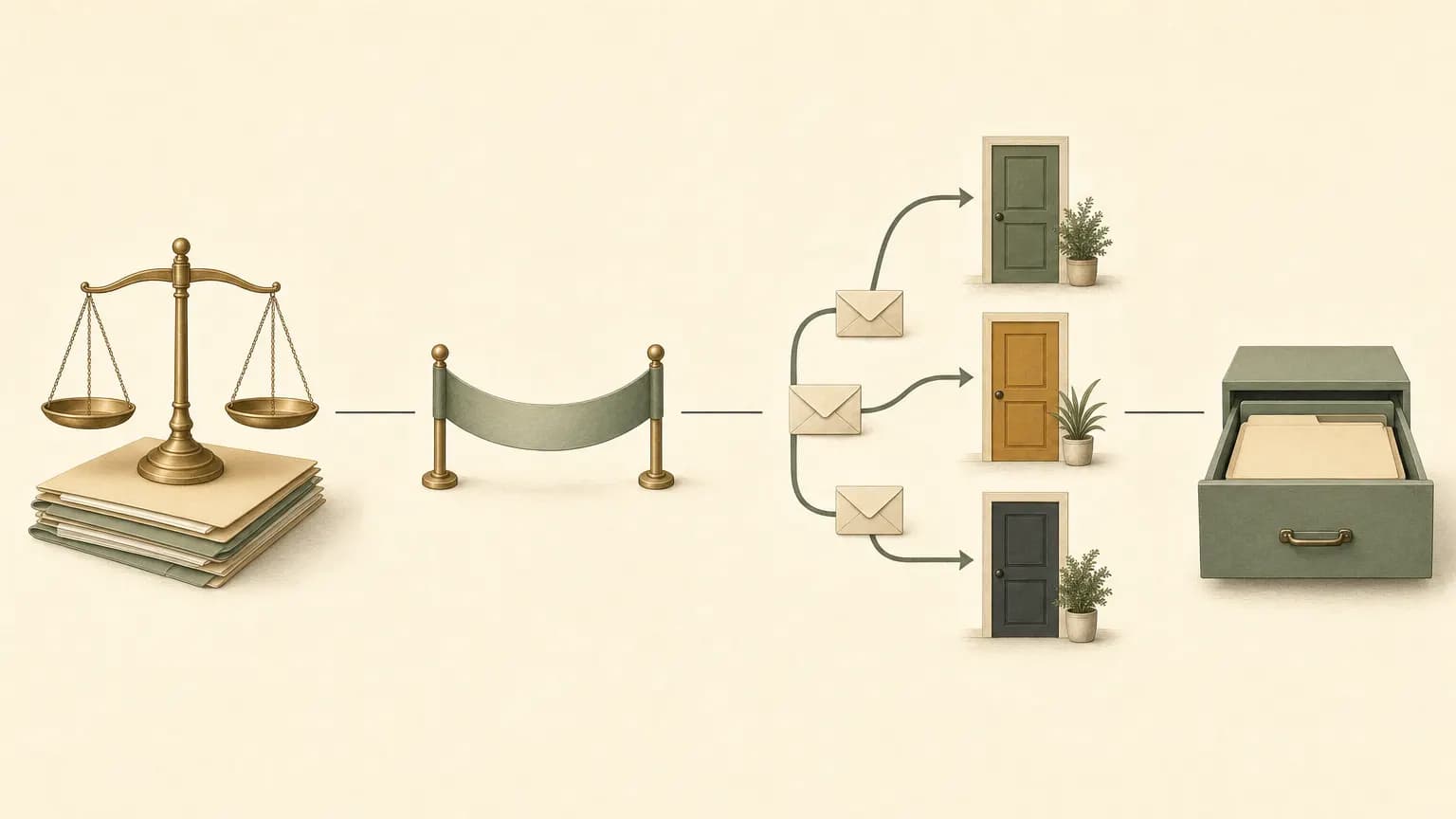
Treat pay transparency as a property of the hiring workflow, not a line in the advert. Five controls do most of the work: pay range data for every role, approval before a range is used, one consistent message across channels, no prompts for pay history, and records of what each applicant was told and when.
Handle the data with care. Article 12 requires personal data processed for information requests, pay reporting and joint pay assessments to comply with the General Data Protection Regulation and to be used only for applying the principle of equal pay. Apply the same discipline to candidate records: collect only what the process needs and agree a retention period with your data protection officer.
- Pay range data per role. Map every requisition to a job in your evaluation structure. Hold the approved range, and any applicable collective agreement terms, as a governed field rather than free text.
- Approval steps. Have an accountable owner approve the range before the requisition opens and whenever it changes. Send offers outside the range to a second approval, with the objective reason recorded.
- Consistent candidate communication. Use the same range on the careers site, job boards, agency briefs, recruiter messages and automated assistants. Two figures for one role undermine the informed negotiation Article 5 supports.
- No pay history prompts. Remove current salary fields from forms and templates, and take the question out of interview guides, chat flows and agency intake.
- Records. Keep a dated record of the range shown, the channel, the advert version and the approvals. If a claim arises, this is the evidence that the Article 5 duties were met.
Where TalentFlow and Bibha workflows fit
Software can make these controls repeatable, but it does not make a process compliant. TalentFlow, a recruitment solution built on Bibha, handles candidate engagement through channels such as email, LinkedIn and WhatsApp, captures information in a structured way, coordinates interview scheduling and prepares drafts for review. Recruiters set the criteria and make the hiring decisions; TalentFlow does not score, rank or recommend candidates.
Because recruiters define the information the process needs to collect, a team can decide not to collect pay history at all. On the Bibha platform, workflows can pause at approval steps before a sensitive action, follow conditional steps based on business rules, and use verified completion to confirm the expected change exists in the connected system. Bibha's governance controls add roles, permissions and audit history. Whether the result meets national law is for your legal team to assess.
Worked example: one role advertised in three countries
Consider a hypothetical employer opening the same customer service team lead role in Italy, the Netherlands and Germany. Italy's decree is in force, the Dutch bill targets 1 January 2027, and in its answer published on 8 July 2026 the German government had not yet started the legislative procedure.
The HR operations lead applies one baseline everywhere. The role is mapped to its job evaluation, and an initial pay range is approved for each country on the same criteria. Each advert carries the range and a gender-neutral title. The application form has no current salary field, and the agency brief rules out pay history questions in writing.
A strong candidate in the Netherlands asks for more than the top of the range. The recruiter can negotiate, as recital 32 allows, but the offer goes to a second approval with the objective reason recorded. Every candidate file shows the advert version and range the person saw. When the German law is adopted, the team adds its national requirements without rebuilding the process.
Common misconceptions about pay transparency in hiring
Most mistakes come from reading the directive as a reporting regime that starts in 2027. The recruitment duties are separate and do not wait for the first report.
- Only large employers are affected. Size thresholds apply to pay gap reporting and joint pay assessments. The Article 5 recruitment duties apply to every employer.
- Avoiding the direct question is enough. Recital 33 also rules out proactively trying to obtain current or past pay, so forms, agency intake and reference checks need the same review.
- A published range proves compliance. Disclosure is one duty among several. Without a job evaluation behind it, a published figure shows that information was shared, not that pay is equal.
Readiness checklist for talent acquisition and HR operations
Use this checklist to test each recruitment process, country by country. Every line maps to a provision of the directive, so a gap can be given an owner and closed.
| Workflow stage | Check | Provision |
|---|---|---|
| Job design | Role mapped to a job evaluation covering skills, effort, responsibility and working conditions | Article 4(4) |
| Requisition | Initial pay or range approved by an accountable owner before the role opens | Article 5(1) |
| Advert | Range, relevant collective agreement terms and a gender-neutral title in every version and channel | Article 5(1), Article 5(3) |
| Screening and interview | No pay history questions on forms, in scripts, agency briefs or chat flows | Article 5(2), recital 33 |
| Accessibility | Pay information available in a format accessible to persons with disabilities | Article 8 |
| Offer | Offers outside the range approved, with the objective reason recorded | Recital 32 |
| Records | Dated evidence of what each applicant was told, kept for an agreed retention period | Article 18(2) |
Questions and answers
Do we have to publish the salary range in every job advert?
Not under the directive itself. Article 5(1) requires applicants to receive the initial pay or its range in a way that supports an informed negotiation, and gives a published vacancy notice or disclosure before the interview as examples. Member states can set stricter rules, so check national law for each country. Publishing in the advert is the simplest way to give every applicant the same figure at the same time.
Does the salary history ban apply when we use a recruitment agency?
The directive places the duty on the employer and does not mention agencies. Recital 33 says employers should not enquire about or proactively try to obtain an applicant's current or previous pay, so a question put on your behalf defeats the purpose. Brief agencies in writing, review their intake forms and confirm the national position with your legal adviser.
When do the pay transparency rules apply to our recruitment?
The directive required member states to bring national laws into force by 7 June 2026, but the actual start date depends on each country's implementing law. Italy's decree took effect on 7 June 2026, while the Dutch bill targets 1 January 2027. Check the date for each country where you hire, and run your process to the directive's baseline in the meantime.
Does the EU pay transparency directive apply to employers with fewer than 100 workers?
Yes, for recruitment. The duties to provide initial pay information, avoid pay history questions and keep recruitment gender-neutral apply to all employers. The 100-worker threshold applies to gender pay gap reporting and joint pay assessments, although member states may require smaller employers to report under national law. National law may also exempt employers with fewer than 50 workers from sharing pay progression criteria, and member states must support employers with fewer than 250 workers through technical assistance and training.
References
- European Parliament and Council of the European Union. (2023). Directive (EU) 2023/970 of the European Parliament and of the Council of 10 May 2023 to strengthen the application of the principle of equal pay for equal work or work of equal value between men and women through pay transparency and enforcement mechanisms. Official Journal of the European Union, L 132. https://eur-lex.europa.eu/eli/dir/2023/970/oj/eng (external site)
- European Commission. (2026, 6 August). Frequently asked questions on the Pay Transparency Directive (2023/970). https://commission.europa.eu/document/download/828ecf2a-e13d-4346-bdca-7eccbbfe28d3_en?filename=FAQs%20on%20the%20pay%20transparency%20Directive%20%28EU%29_2023_970.pdf (external site)
- European Commission. (n.d.). EU action for equal pay. https://commission.europa.eu/strategy-and-policy/policies/justice-and-fundamental-rights/gender-equality/equal-pay/eu-action-equal-pay_en (external site)
- European Commission. (2026, 5 June). New EU rules on pay transparency explained. https://commission.europa.eu/news-and-media/news/new-eu-rules-pay-transparency-explained-2026-06-05_en (external site)
- European Institute for Gender Equality. (2026). EU-wide guidelines on gender-neutral job evaluation and classification: Step-by-step toolkit. https://eige.europa.eu/gender-mainstreaming/toolkits/gender-neutral-job-evaluation (external site)
- Decreto legislativo 7 maggio 2026, n. 96. (2026). Gazzetta Ufficiale della Repubblica Italiana, n. 125, 1 June 2026. Normattiva. https://www.normattiva.it/uri-res/N2Ls?urn:nir:stato:decreto.legislativo:2026-05-07;96 (external site)
- Rijksoverheid. (2026, 21 May). Meer openheid over loonkloof tussen mannen en vrouwen. https://www.rijksoverheid.nl/actueel/nieuws/2026/05/21/meer-openheid-over-loonkloof-tussen-mannen-en-vrouwen (external site)
- Deutscher Bundestag. (2026, 8 July). Antwort der Bundesregierung auf die Kleine Anfrage der Fraktion der AfD: Bürokratiefolgen der Entgelttransparenzrichtlinie (Drucksache 21/7026). https://dserver.bundestag.de/btd/21/070/2107026.pdf (external site)
- Pinsent Masons. (2026, 9 July). EU Pay Transparency Directive: implementation across EU member states. Out-Law guide. https://www.pinsentmasons.com/out-law/guides/eu-pay-transparency-directive-eu-member-states (external site)